
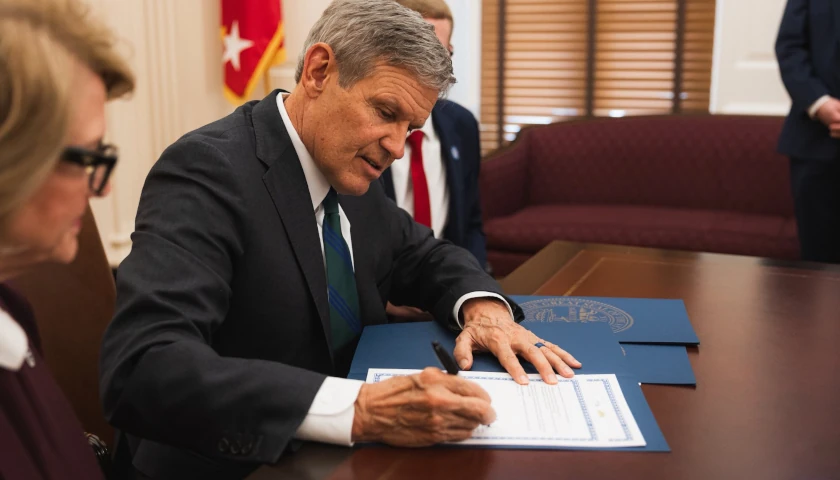
Governor Bill Lee on Friday signed Senate Bill (SB) 2040, the Freedom, Access, and Integrity in Registered Pharmacy (FAIR Rx) Act into law. Once fully active in January 2028, it will prohibit vertical integration between pharmacy benefit managers (PBMs) and pharmacies in Tennessee. It will force divestment from any already vertically integrated companies by January 1, 2027.
The legislation was passed with the support of the Tennessee Pharmacists Association (TPA), and its chief executive officer, Dr. Anthony Pudlo, recently commended the pharmacists elected to the General Assembly for successfully pushing it through.
In a podcast appearance earlier this month, Pudlo said the concept originated with State Senator Bobby Harshbarger (R-Kingsport), who, like his mother, U.S. Representative Diana Harshbarger (R-TN-01), is a licensed pharmacist.
“Throughout the summer and into the fall, we started working more closely with Senator Harshbarger, and other pharmacist champions in the State Senate,” said Pudlo. He added, “We have been very pleased from the support that we’ve seen, both on the Senate side as well as in the State House.”
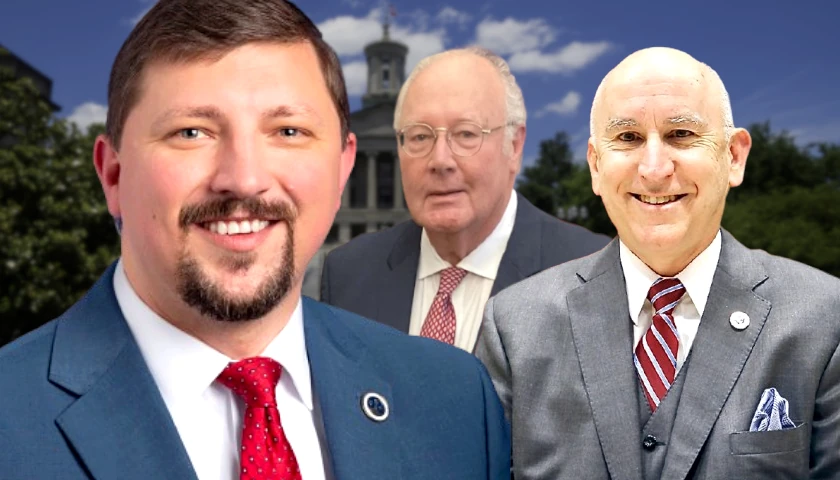
In addition to Bobby Harshbarger, at least five lawmakers who sponsored the State House or State Senate versions are also pharmacists, doctors, or work in related fields.
Other sponsors who have backgrounds as pharmacists include Lt. Governor Randy McNally (R-Oak Ridge), who graduated from the University of Tennessee College of Pharmacy in 1969, State Senator Shane Reeves (R-Murfreesboro), who in 2015 sold the Reeves-Sain Drug Store and has since founded TwelveStone Health Partners, and State Senator Ferrell Haile (R-Gallatin), who was a pharmacist for decades.
Two more sponsors work in related fields, as State Senator Joey Hensley (R-Hohenwald) is a practicing family physician, and State Senator Bo Watson (R-Hixson) is a physical therapist.
Similarly, while the bill’s lead sponsor in the House, State Representative Rick Scarbrough (R-Oak Ridge), is not a pharmacist, his wife is the co-owner of Hoskins Drug Store in Anderson County.
The ties between many of the sponsors and Tennessee pharmacies led to skepticism from some members of the public, including the Tennessee Employer Benefits Alliance, who accused them of acting in a “self-dealing manner” in an April statement published by Knox News.
“The alliance is disappointed that the Tennessee General Assembly would throw hard-working Tennesseans under the bus to enrich a small group of well-connected independent pharmacists despite opposition from patient advocates, veterans, business leaders, and everyday taxpayers stuck holding the bag,” said the organization.
Its statement declared, “It is shameful to see lawmakers act in such a craven, self-dealing manner, ignoring the consequences for the people they represent. This law would give any business, big or small, pause when considering making a home in the Volunteer State.”
The Tennessee Star asked Pudlo whether he or TPA had addressed public concerns that the legislation could constitute self-dealing by lawmakers who are pharmacists, but did not receive a response prior to press time.
Similarly, The Washington Examiner noted in March that many of the legislation’s sponsors received donations from various organizations representing the interests of independent pharmacies.
Haile, who reportedly received $44,800 from the American Pharmacy Cooperative and $23,000 from the TPA, told the Examiner the donations did not represent a conflict of interest.
“Like many legislators, I receive contributions from a wide range of groups, and those donations do not dictate how I vote. I no longer practice pharmacy, and my support for this legislation is based solely on what I believe is best for my constituents,” said Haile, according to the outlet. “The real conflict of interest exists within the current PBM structure, where companies can control reimbursement rates, design pharmacy networks, and at the same time own the pharmacies those decisions benefit.”
In addition to concerns over litigation and potential self-dealing, State Representative Robert Stevens (R-Smyrna) also warned that the legislation seemed to invite a legal challenge.
“We’re dealing with an out-of-state company here and part of the crux of this legislation seems to be that we’re trying to protect local pharmacies and punish the big ones,” Stevens reportedly said during a floor debate. “I think that’s going to lead us into one of these companies and PBMs and we’re probably going to be on the losing end of that.”
A spokesman for CVS confirmed in a statement sent to The Star on Friday that the company intends to sue over the law.
“We will exhaust all options we can to continue to provide pharmacy and health care services to our 1.5M+ Tennessee pharmacy patients and will be filing a lawsuit this afternoon challenging the constitutionality of this law in federal court,” said the company. “This unconstitutional law puts special interests and local politics ahead of patients, restricting their access to life-saving medications and undermining fair competition.”
Potentially indicating what arguments may be included in a lawsuit, the statement claimed the legislation was “designed” to target CVS, “while protecting in-state pharmacy businesses.”
According to CVS, “For these reasons, S.B. 2040 violates the Constitution’s Dormant Commerce Clause, which prevents states from discriminating against or unfairly burdening out-of-state business. We have a right and responsibility to challenge this harmful policy to protect patient care and fair competition.”
The company also reiterated its claims that the law will cause it to close 134 pharmacies, 25 MinuteClinic retail locations, and the termination of of 2,000 workers at its various stores. CVS previously told The Star it will annually disrupt 26 million prescriptions for 1.5 million customers.
“The passage of this legislation will increase Tennessee employers’ drug costs by more than $180 million a year and does nothing to lower the cost of prescription medication. Facts should matter more than rhetoric, and a thoughtful and realistic economic analysis could have avoided this chaos,” said the company. “Small businesses, employers, health plans, and others are going to have to pay more for prescription drugs in 2028 because of this new law.”
CVS is already a plaintiff in a similar lawsuit filed shortly after Arkansas Governor Sarah Huckabee Sanders signed a similar bill into law last year.
In the lawsuit, Trump-appointed U.S. District Judge Brian Miller issued a preliminary injunction blocking the law from taking effect, finding that the plaintiffs are likely to prevail in court.
– – –
Tom Pappert is a 2025 recipient of the Dao Prize and the lead reporter for The Tennessee Star. He also reports for the Star News Network. Follow Tom on X. Email tips to [email protected].
Photo “Gov. Bill Lee” by Gov. Bill Lee.



This thing sure smells fishy to me. One does not have to purchase from CVS if they do not want to.